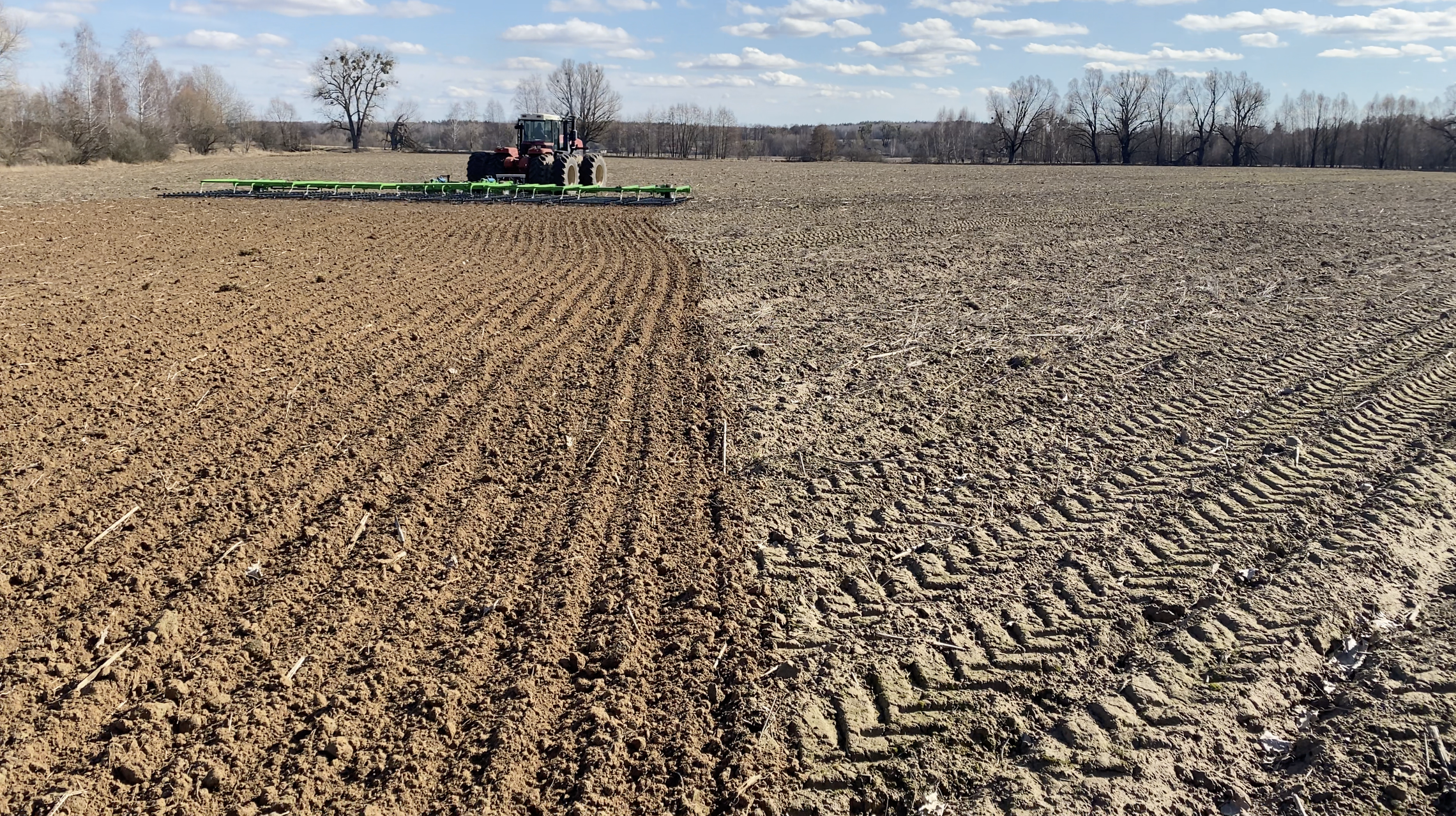
Moisture retention in the spring: when should you go out into the field with a flexible harrow?
In the spring, it is important for farmers not only to begin fieldwork in a timely manner, but also to avoid going out into the field too early. Driving machinery over waterlogged soil can lead to compaction, rutting, and the formation of large clods, which will hinder further pre-sowing preparation.
Therefore, the timing for moisture retention is determined not by a specific date, but by the actual condition of each field. Before heading out, it is necessary to assess the moisture content, the structure of the topsoil, the terrain, the amount of crop residue, and the soil’s ability to crumble under the action of the implement’s working parts.
Short answer: When to start harrowing
You can take a flexible harrow out into the field when the topsoil no longer sticks to the working parts and wheels, does not smear, and breaks up into separate pieces. After each pass, the harrow should loosen and level the surface, rather than leave shiny, compacted strips and wet clumps.
Before starting work, check several areas: hills, low-lying areas, ruts, the edge of the field, and the main part of the field. Even within a single field, these areas can dry out at different rates.
What Does “Moisture Sealing” Mean?
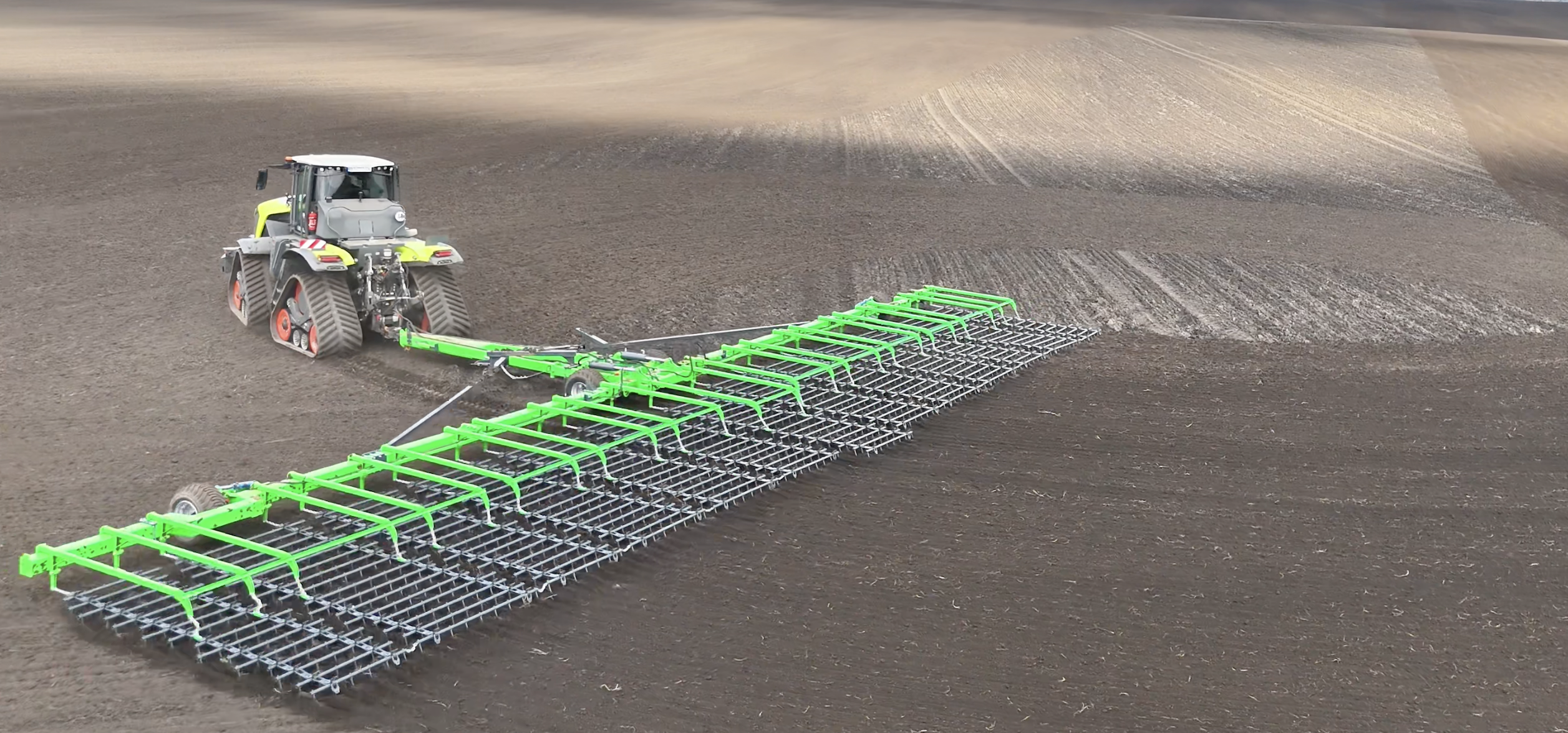
This term refers to an early-spring surface tillage operation designed to level the field, loosen the topsoil, break up visible clods, and prepare the surface for the next step in the cultivation process.
However, the passage of the machine alone does not guarantee that a certain amount of water will be retained. The result depends on soil moisture and type, the depth and intensity of tillage, weather conditions, the amount of crop residue, and the timing of the work.
Excessively intensive or repeated tillage can, on the contrary, accelerate drying. Studies of tillage systems show that more severe mechanical disturbance of the soil and a reduction in surface cover increase moisture loss. Therefore, the goal of the operation is to achieve the desired surface condition with the minimum necessary impact.
How to check soil readiness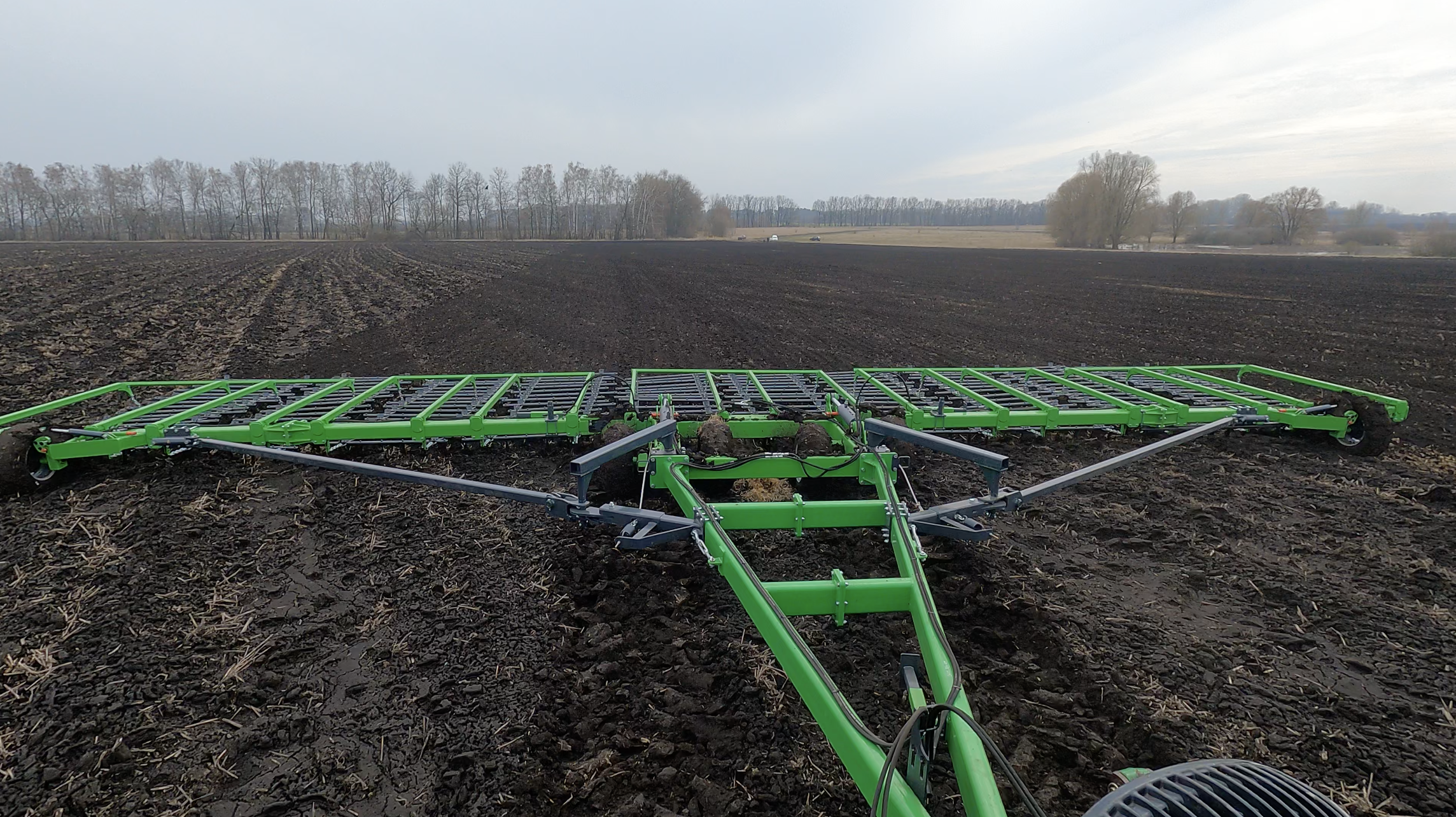
Start with a simple field test at the depth where you plan to till.
Take some soil in your hand and squeeze it. If it easily forms a pliable, sticky clump, spreads between your fingers, and forms a long ribbon, it’s still too early to go out into the field. If the clump falls apart with light pressure or when tossed in the air after being squeezed, the soil may be ready for work.
This is merely a practical guideline. Clayey and heavy soils retain their plasticity longer, whereas lighter soils dry out faster. Therefore, the decision must be made separately for each field.
Signs of readiness:
- the soil does not stick in a solid layer to shoes, wheels, or tines;
- the clump crumbles rather than smears;
- the tractor’s wheels do not leave deep, soft ruts;
- no wet, shiny streaks form after passing over the field;
- the working sections do not become clogged with moist soil and debris;
- the actual working depth remains uniform across the width of the implement.
When it is best to postpone work
You shouldn’t head out into the field just because the forecast calls for warmer weather or because you’re worried about losing a day. You should postpone work if:
- there is standing water in ruts or low-lying areas;
- soil sticks to the working parts;
- a dense, plastic clod forms after compaction;
- wheels leave deep ruts;
- the top layer has dried out, but the soil beneath remains waterlogged;
- the tiller sections are smearing the surface instead of loosening it;
- different parts of the field are in too varied a condition.
Working on wet soil can degrade its structure. Iowa State University recommends checking soil moisture before spring operations, as the movement of heavy equipment and tillage on waterlogged soil increase the risk of compaction and the formation of large, uneven clods.
How to perform a test pass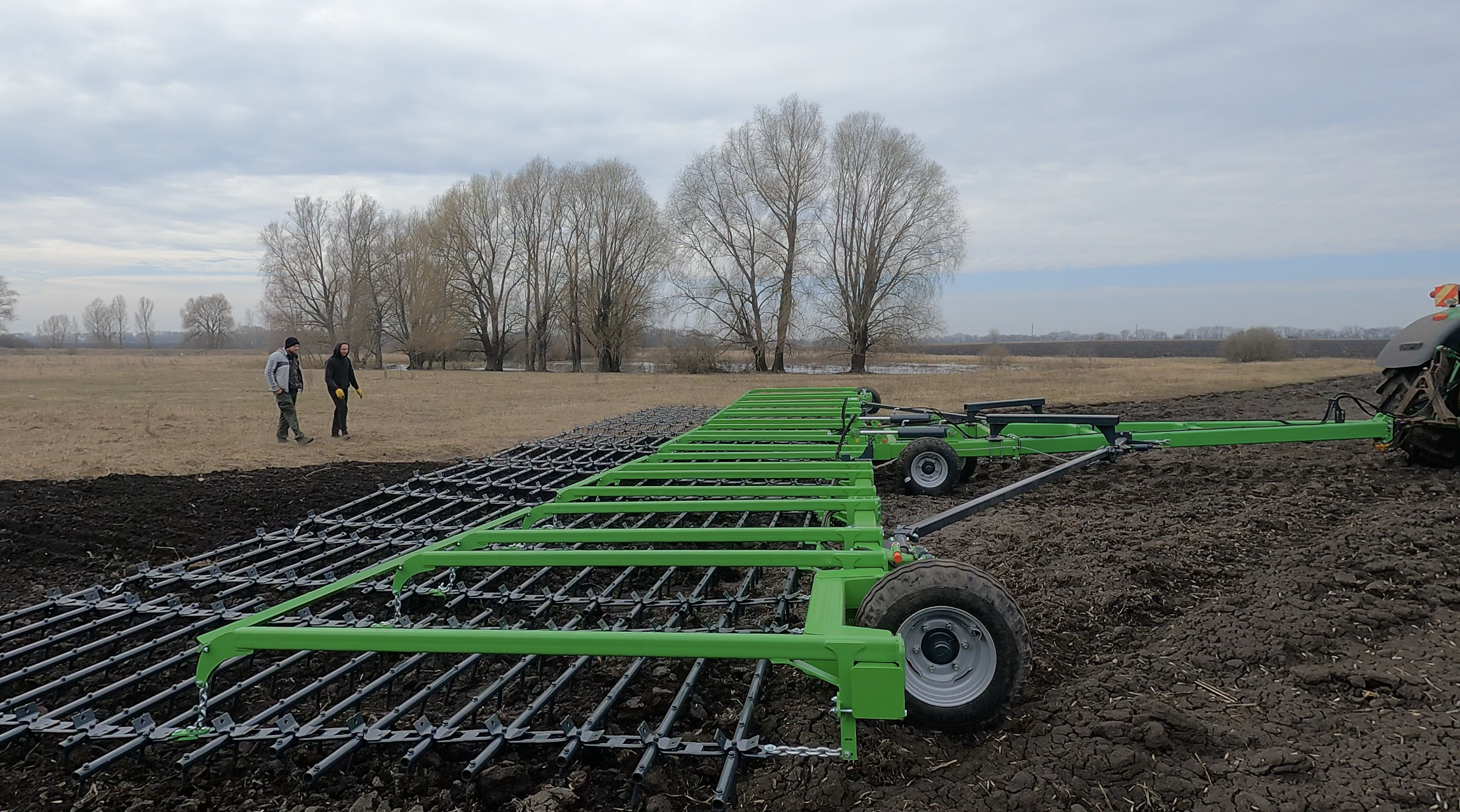
Even if the field appears to be ready, do not set the maximum operating intensity right away.
- Select a typical section of the field approximately 100–200 meters long.
- Set the working sections to the same position across the entire width.
- Start with the moderate setting recommended for your specific model.
- Complete the test pass without sudden changes in speed.
- Stop and check the surface quality at several points.
- Assess loosening, leveling, ruts, clods, and residue distribution.
- If necessary, change only one setting and repeat the pass.
If you change the tine position, speed, and depth all at once, it will be difficult to determine exactly what improved or worsened the result.
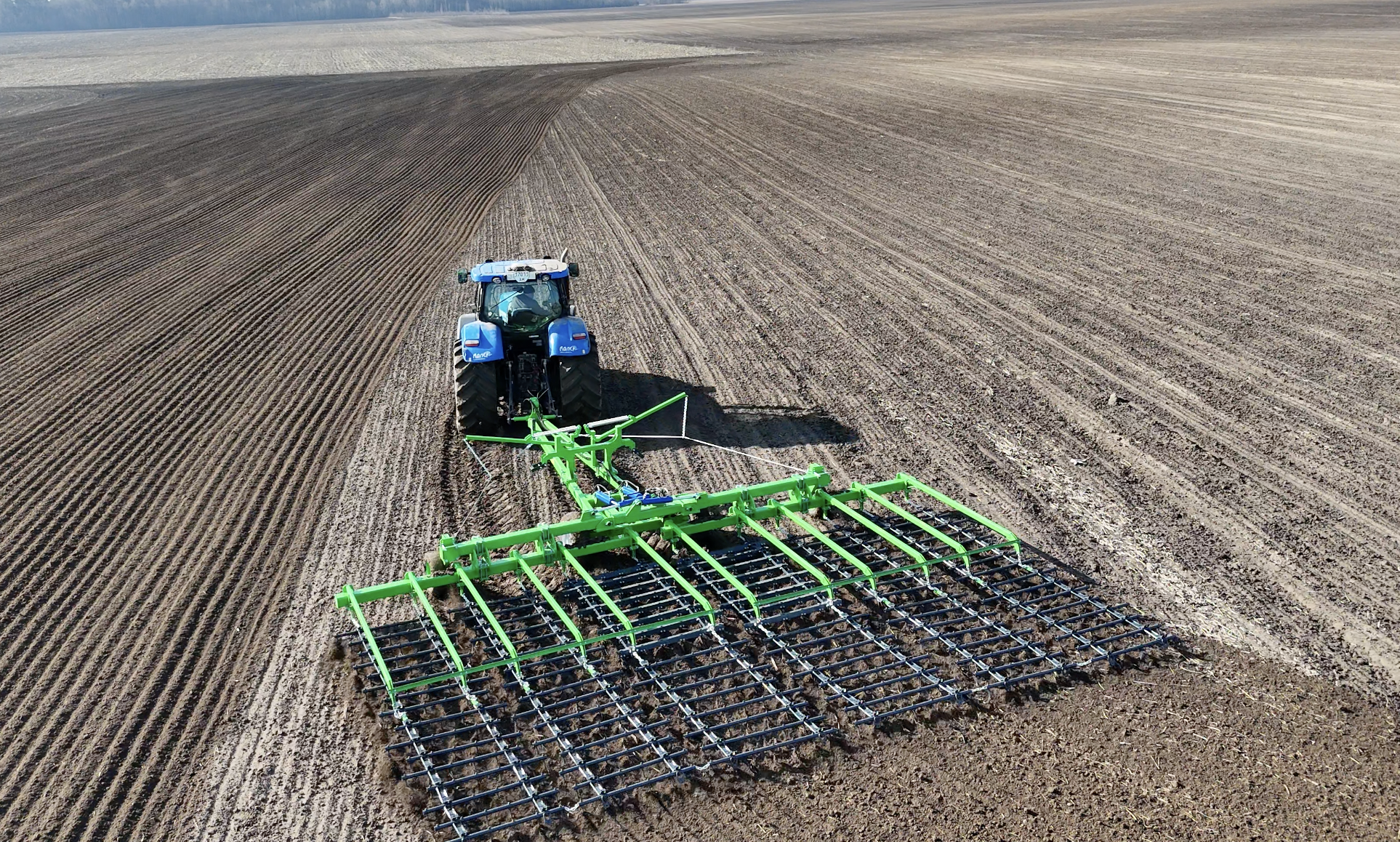
How the Green Way flexible harrow works
Green Way flexible harrows are used for continuous surface cultivation after initial field preparation. The working sections follow the contours of the ground, loosen the topsoil, level the surface, break up any crust that has formed, and distribute crop residues.
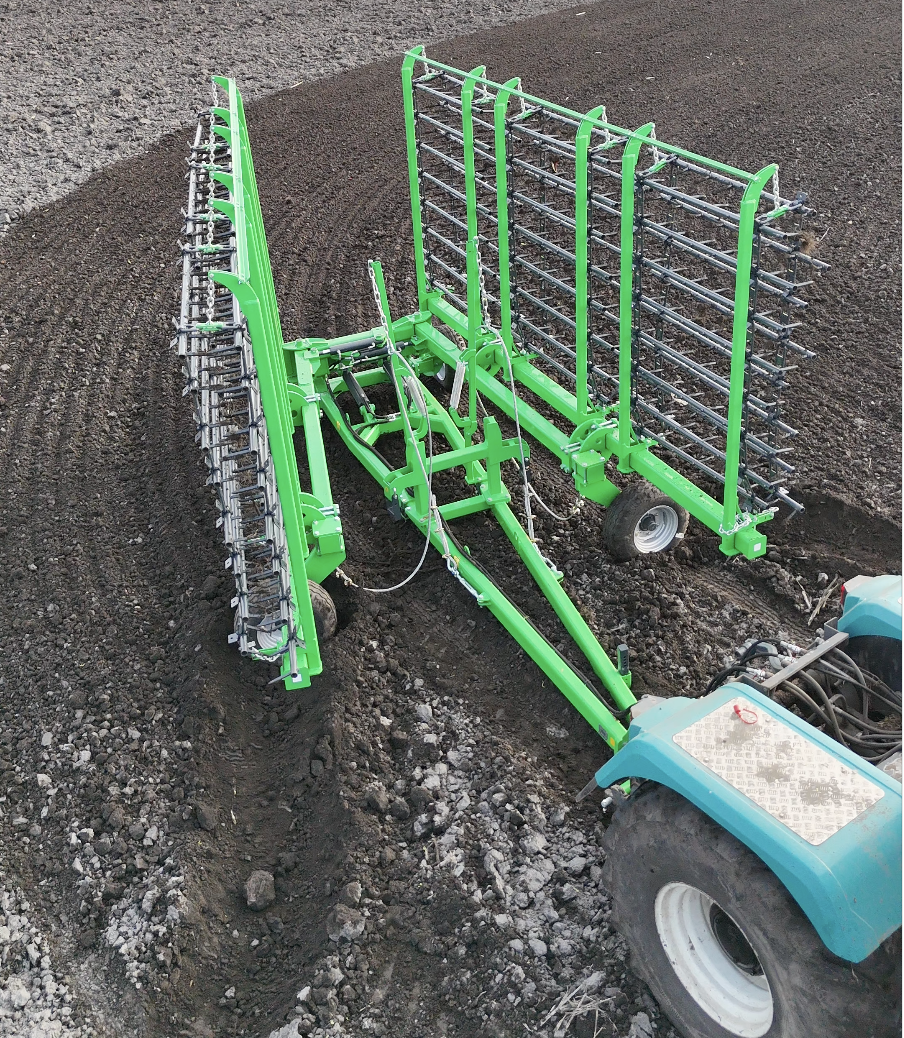
The Avers-Agro product line includes mounted and trailed units with various working widths. When selecting a model, consider the following:
- the tractor’s power and traction capacity;
- the area and configuration of the fields;
- the required productivity;
- transport routes and turning areas;
- soil type and amount of crop residue;
- the primary objective of the spring pass.
For heavy-duty areas, reinforced sections are available that are installed in the tractor’s wheel tracks. However, any additional equipment must be coordinated with the manufacturer, as it affects power requirements.
Common mistakes when sealing in moisture
Relying solely on the calendar. The same date does not mean the fields are equally ready, even within the same farm.
Working on waterlogged soil. This increases the risk of rutting, smearing, and compaction.
Trying to break up the surface as finely as possible. A layer that’s been broken up too finely is more vulnerable to wind, re-compaction, and crusting after rainfall.
Setting an aggressive mode right away. Start with moderate settings and test the results on a test strip.
Apply the same settings to all fields. Soil type, moisture content, crop residue, and topography require individual assessment.
Make unnecessary passes. Each operation should address a specific task. If the surface already meets the requirements for the next operation, an additional pass may not be necessary.
Frequently asked questions
Should you go out into the field immediately after the snow melts?
No. First, you need to wait until the soil is physically ready. The surface drying out does not necessarily mean the field can support a tractor and implement without compaction.
Is it okay to check the field in just one spot?
It’s not recommended. Low-lying areas, high spots, ruts, and sections with varying amounts of crop residue dry out at different rates. Check several representative areas.
Are two passes with a flexible harrow necessary?
Only if the first pass didn’t produce the desired result and a repeat operation is agronomically justified. You shouldn’t automatically plan for two passes.
What width of flexible harrow should I choose?
The width is selected based on the tractor, the area, the length of the passes, the required throughput, and transportation conditions. The Green Way catalog features mounted models ranging from 4.3 to 9 meters and trailed models ranging from 5.3 to 24 meters.
Conclusion
The optimal time to seal in moisture is determined not by the date, but by the condition of the soil. The field should be able to withstand the passage of machinery without developing deep ruts, and the topsoil should crumble rather than smear. Start by inspecting several sections, testing the soil with your hand, and making a test pass.
To select a Green Way flexible harrow that matches your tractor’s power, field area, and farm conditions, contact the specialists at Avers-Agro. During your consultation, have information ready about your tractor model, field area, soil type, and desired productivity.
Sources for editorial review: guidelines for assessing soil moisture and the risks of working on wet soil — Iowa State University Extension; the effect of tillage intensity on soil moisture — University of Minnesota Extension; The role of ground cover in reducing evaporation — FAO; Green Way specifications — Avers-Agro’s official website.